Disability and pregnancy

Women with some disabilities sometimes risk their health or even their life to have a baby.  What issues does the story below raise for you about disability, sexuality, risk and parenthood? Will  this child be disadvantaged or lucky to have such a determined mother?

danska-trudna01

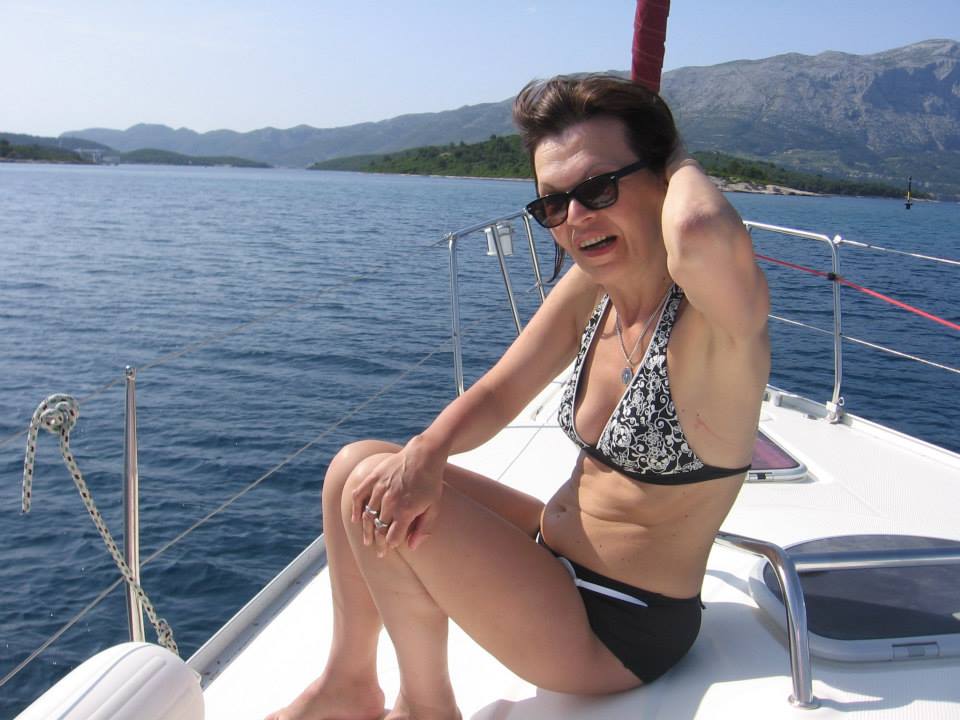
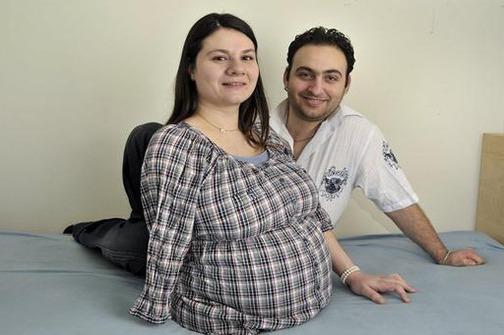
Dankinja Melek was born with no legs and one arm. Though the doctors told her that pregnancy could be dangerous for her, Melek will soon give birth to a child.

The doctors have told me that they are worried about me but I was not nervous, and I believe that it will be all right. I’m eight months pregnant and everything is fine – says Melek who is about to give birth to a boy. The boy currently  weighs three pounds, and Melek and her husband have decided to name him Semih Akin.

Melek says she got pregnant naturally. She added that at first she could not believe she was pregnant, and she made five or six tests to be sure. She admitted that the last two months have been very difficult. During pregnancy I obviously gained a few pounds and therefore generally lie down – Melek said. She is helped a lot to her husband Mehmet who is originally from Turkey. They met a few years ago. At first they were friends, and then they fell in love. They were married six years ago.

Originally prepared by: Bojana Minic

Translated and edited by: Matthew Griffiths

Source: magazine.invalidnost.net


Video

Living with autism – a sister’s story

matthewgriffiths98's avatarDisability and an Ordinary Life

It’s often difficult for people with a disability to lead an ordinary life but  it’s often difficult for family members too.  Family members may feel that they cannot express their true feelings. Emma, whose story is set out here, bravely sets down her feelings about her brother’s autism. Her story is included here to show just how difficult it can be to live with a severely autistic sibling – and to show that it is OK to express negative feelings. We don’t have to be saints!

I have never accepted my brother’s autism and have found it very difficult to deal with. His name is Daniel, and he has severe autism. I am 18 years old, and he is 16, with the mind of an infant. I shall never hear my brother say my name. He cannot speak, is still in nappies, and has been living in a special care…

View original post 664 more words

Disability and Happiness. Do you agree with Tom Shakespeare?

A Point of View: Happiness and disability

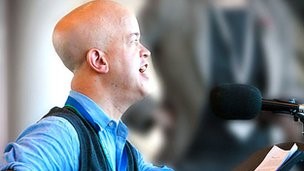
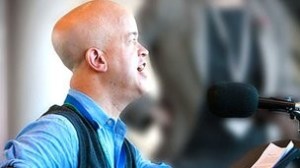
Tom Shakespeare is a sociologist, writer and performer who researches disability studies, bioethics and medical sociology. He was born with restricted growth and leads research into the condition
tom

Surveys reveal that people with disabilities consistently report a good quality of life, says Tom Shakespeare. So why is it often assumed they are unhappy?
Have you ever thought to yourself: “I’d rather be dead than disabled?” It’s not an unusual reflection. Disability, in everyday thought, is associated with failure, with dependency and with not being able to do things. We feel sorry for disabled people, because we imagine it must be miserable to be disabled.
But in fact we’re wrong. It’s sometimes called the “disability paradox”. Surveys reveal people with disabilities consistently report a quality of life as good as, or sometimes even better than, that of non-disabled people.
 10407283_872189712794962_3163152776473717789_n                10346202_872189806128286_8576963364095557770_n

Impairment usually makes little difference to quality of life. Research shows, for example, that overall levels of life satisfaction for people with spinal cord injury are not affected by their physical ability.
Even the clinical facts of whether their spinal lesion is high or low, complete or incomplete – all aspects that affect functioning – don’t seem to make much difference. Human flourishing is possible even if you lack a major sense, like sight, or you can’t walk, or you’re totally physically dependent on others.

So what’s going on?

If you think about it for a moment, you realise that people born with an impairment have nothing to which they can compare their current existence. Someone lacking hearing or sight has never experienced music or birdsong, visual art or a sublime landscape. Someone with an intellectual disability may not consider themselves different at all. Someone like me, born with restricted growth, has always been that way. Even if life is sometimes hard, we are used to being the way we are.
For people who become disabled, there’s a typical trajectory. I can say this from personal experience, having become paralysed in 2008. Immediately after the onset of injury or disease, one can feel profoundly depressed, and even contemplate suicide. Yet after a period of time, people adapt to their new situation, re-evaluate their attitude to the disability, and start making the most of it. Sometimes, they are driven to greater achievements than before. Remember those amazing Paralympic athletes…
Maybe you are sceptical about the subjective nature of quality-of-life data. Bioethicists sometimes describe these self-reports in terms of the “happy slave” concept, in other words, people think they are happy because they do not know any better. Perhaps these cheerful people with disabilities are deluding themselves. Or, perhaps they are fooling others. Maybe in private they admit to misery, while in public they put on a brave face. Either way, it’s said these folk must be in some kind of denial.
But these explanations are patronising, not to say insulting. More importantly, they’re wrong. Research in a field called hedonic psychology has supported disabled people’s self-reports of good quality of life. Scientists such as Daniel Gilbert have done very thorough testing of what people say and how they think. They’ve come up with the concept of hedonic adaptation – which refers to the way in which after trauma, quality of life eventually returns to approximately what it was before the trauma struck. Amazing, eh? Unfortunately this also happens in reverse – so, if you are lucky enough to win the lottery, you’ll feel like £10m for a year or two, but then you’ll go back to being as miserable or cheerful as you were before your stroke of luck.
So if these self-reports are true, we will need to find better ways of understanding the disability paradox.
To start with, we can offer more nuanced accounts of the psychological processes that go on in the mind of a person with disability. Adaptation means finding another way to do something. For example, the paralysed person might wheel, rather than walk, to, places. Coping is when people gradually re-define their expectations about functioning. They decide that a stroll of half a mile is fine, whereas previously they would only have been content with a 10-mile ramble. Accommodation is when someone learns to value other things – they decide that rather than going for walks in the country with friends, it’s far more important to be able to go to great restaurants with them. This teaches us an important lesson – human beings are capable of adapting to almost any situation, finding satisfaction in the smaller things they can achieve, and deriving happiness from their relationships with family and friends, even in the absence of other triumphs.

Our appraisal of life with impairment may have less to do with reality than with fear and ignorance and prejudice. We wrongly assume that difficulties for people result in misery for people.
Even to the extent that impairments do entail suffering and limitation, other factors in life can more than compensate for them. Take the recent French box office sensation Les Intouchables, in which the protagonist, Philippe has tetraplegia, but despite this, he is able to have a good quality of life because he has money. Even people who aren’t lucky enough to be wealthy Parisian aristocrats can enjoy the benefits of friendship or culture, despite the restrictions that impairment places on them. By contrast, it is plain to see that someone can have a fully functioning body or mind and yet lack the social networks or the personality necessary for living a happy and fulfilled existence.
This highlights the importance of the environment in determining the happiness of disabled people. As in most areas of life, it’s structural factors that make the real difference. Participation, not impairment is key. Do access barriers stop you going to school with your friends? Do you have a job? Does society meet the extra costs of having an impairment through a welfare system which is fair and non-stigmatising? Do you face hostility and hate crime? Unfortunately, in most of these respects the situation for disabled people has been getting worse, not better, in recent years. According to the Centre for Welfare Reform, this government’s spending cuts have had a hugely disproportionate impact on the lives of disabled people in poverty.

In arguing that social barriers are more of a problem than the impairment itself, I am not suggesting that fear is completely irrational. For a start, disability is very diverse in ways that mean we have to soften the claim that “disability is no tragedy”. Some illnesses and impairments undoubtedly involve greater degrees of misery or suffering than the average human should have to endure. I’m thinking of depression, for example, which biologist Lewis Wolpert memorably labelled “malignant sadness”. There are some nasty and painful degenerative diseases. Impairments that involve considerable pain, whether physical or mental, are obviously less compatible with a good quality of life.
It’s also true that in general, disabled people usually have fewer choices than non-disabled people. Most societies still have limited accessibility. Even in a barrier-free world, the disabled person is more likely to rely on mechanical devices that periodically malfunction, rendering the individual excluded or dependent. I have been stranded thanks to a flat tyre on my wheelchair or a broken lift numerous times. Most disabled people become inured to the frustrations of inaccessibility or breakdown, but it certainly makes life less predictable and less free than it is for the non-disabled.

But my point is that while disability is not simply an irrelevant difference, like the colour of your skin, neither need it be a tragedy.
And remember: Mere existence entails problems. Hamlet, listing reasons why death is to be preferred, highlights “the thousand natural shocks that flesh is heir to”. To be born is to be vulnerable, to fall prey to disease and suffering, and ultimately to die. Sometimes, the part of life that is difficult brings other benefits, such as a sense of perspective or true value that people who lead easier lives can miss out on. If we always remembered this, perhaps we would turn out to be more accepting of disability and less prejudiced against disabled people.


A Point of View is broadcast on Friday on Radio 4 at 20:50 BST and repeated on Sunday at 08:50 BST. Catch up on BBC iPlayer
Support needed for the struggle Can you respond?

I have my life ahead of me but I don’t really feel like I can cope with adapting and making do for the rest of my life. I’m 21 old and have cerebral palsy. I struggle with depression a lot and although I admire some other disabled people for what they have achieved, I don’t really feel that I can do the same.

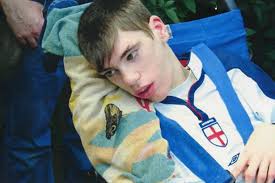
cerebral palsy1This picture and the one below illustrate aspects of cerebral palsy. They do not relate to the writer in this post

Nobody really understands my pain, I find it hard to watch everyone around me go to university, get a job, have relationships or go travelling and take everyday things for granted while I plod along. I’ve thought about ending it all but my family and friends would never understand and probably resent me for it but to me, but I sometimes feel that I have no other option because all I see in front of me is a life of misery and hardship. I hate it too much to live with it. I was just wondering if there was any advice anyone out there could give me? Have you ever felt a similar way? I’ve been on antidepressants on and off for about 6 years as well as going through counselling and visiting psychiatrists – I don’t mean to unload on anyone but I would like a perspective from someone who knows how it feels. It would help to know that I’m not alone.

Prejudice and discrimination

Although we do not like to admit it, we all have prejudices. However in  fair society  we must try to  ensure that our prejudices do not become discrimination.

 IMGP0691

P1050963-001

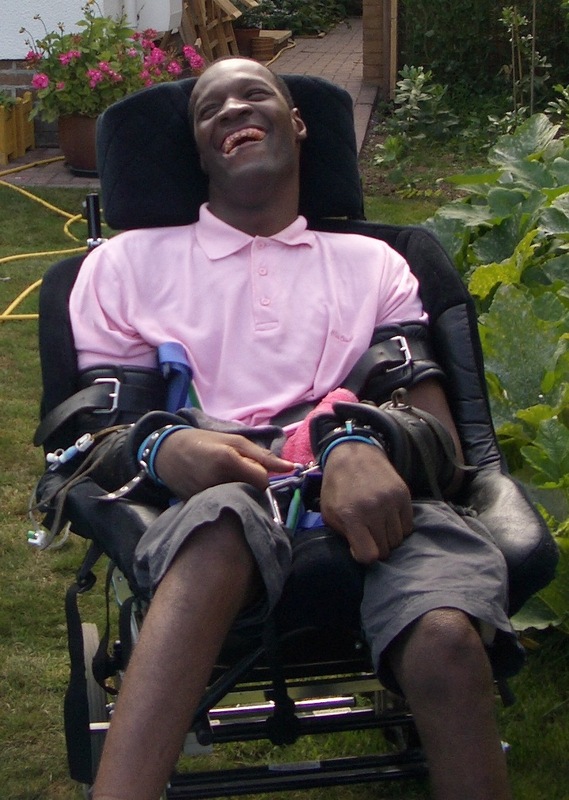
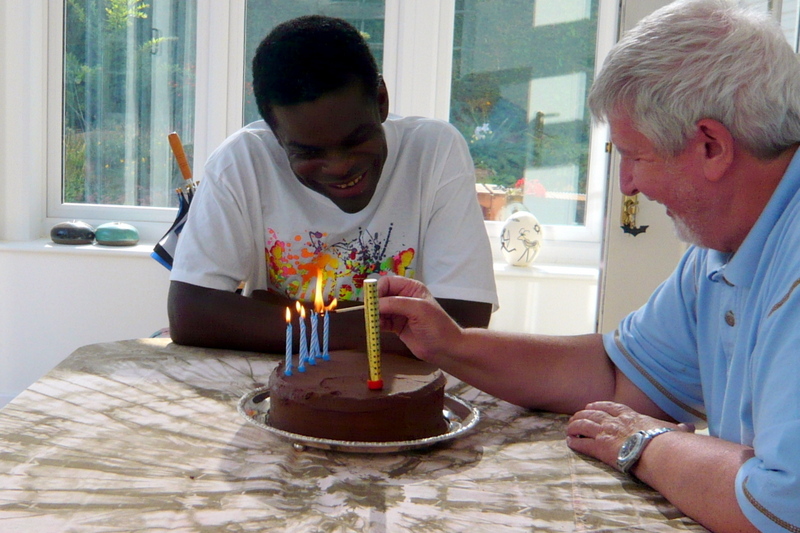
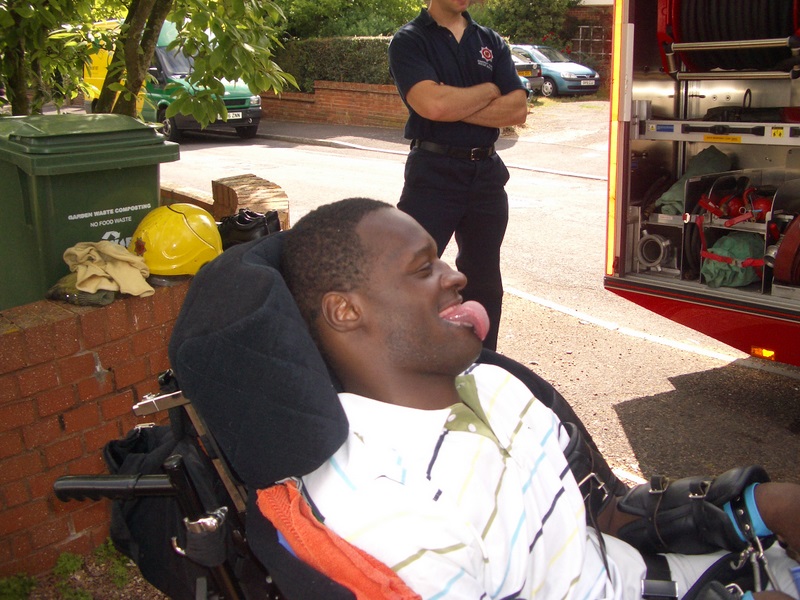
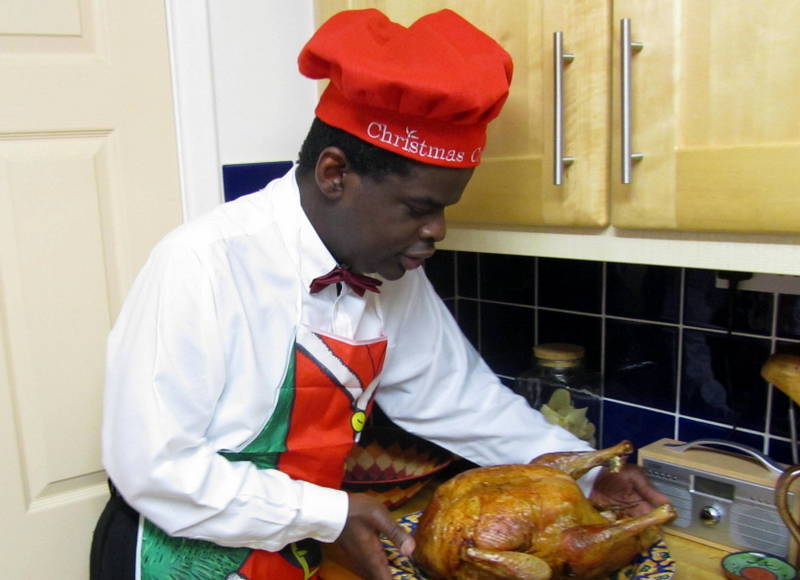
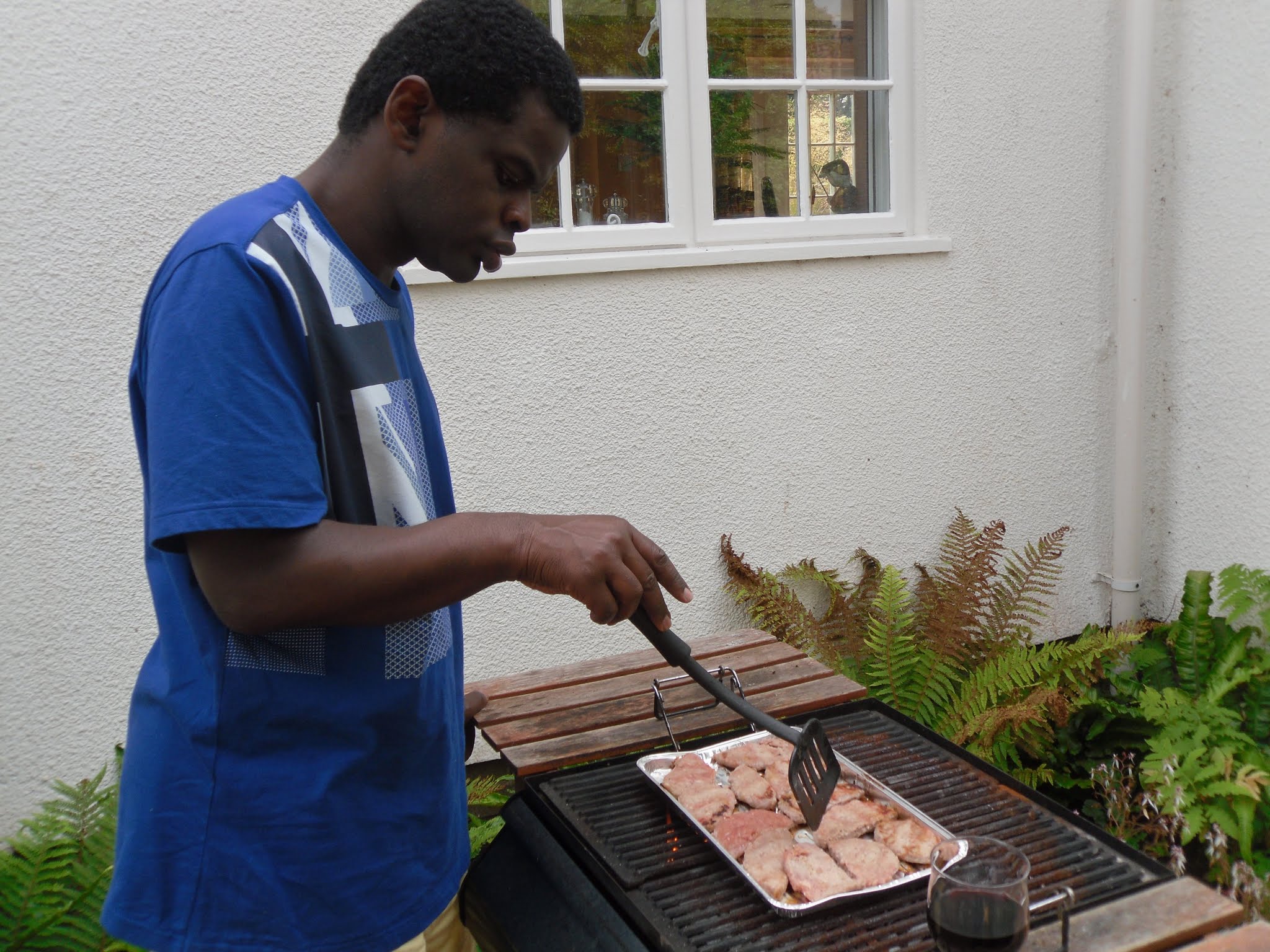
My sons  – both black and disabled!

Prejudice is an unjustified or inaccurate attitude towards an individual based solely on the individual’s membership of a  group. Many people will have prejudices against people  with disability, people of a different colour or those who are different from them in some way. They may think that having children with disabilities in their school will affect the progress of other children; they may think that all people  with disabilities are stupid, difficult or incapable of following the regular curriculum, unable to work, have relationships or be full members of society. Although it would be better if we  were not prejudiced, must of us are, one way or another, we  to ensure that prejudices do not become discrimination. We have to be sure that we do not discriminate, whatever our personal prejudices may be. Discrimination occurs when an individual or group behave in a negative way towards an individual or group of people, such as people with disabilities. A prejudiced person may not act on their attitude. So someone can be prejudiced towards a certain group but not discriminate against them. Discrimination involves behaviour and that is what we  can control – we  cannot control attitudes. But you may think otherwise! However, prejudiced attitudes are often changed when people have contact with the group they were prejudiced against. They realise that their attitudes were inaccurate. However, close contact sometimes hardens prejudices. Why not challenge yourself to think about prejudice and discrimination. What should the education system be doing to challenge this discrimination? Think about what you could do. What could you do yourself to challenge this discrimination? Whose discriminatory behaviour should you challenge? Think about yourself.  What are your prejudices? Is any of your own behaviour discriminatory? Remember that disabled people can be equally prejudiced, as can black people and other groups who are themselves the victims  of prejudice and discrimination.

IMGP0618                    IMG_0408

Video

Living with autism – a sister’s story

It’s often difficult for people with a disability to lead an ordinary life but  it’s often difficult for family members too.  Family members may feel that they cannot express their true feelings. Emma, whose story is set out here, bravely sets down her feelings about her brother’s autism. Her story is included here to show just how difficult it can be to live with a severely autistic sibling – and to show that it is OK to express negative feelings. We don’t have to be saints!

I have never accepted my brother’s autism and have found it very difficult to deal with. His name is Daniel, and he has severe autism. I am 18 years old, and he is 16, with the mind of an infant. I shall never hear my brother say my name. He cannot speak, is still in nappies, and has been living in a special care home for four years due to his unmanageable behaviour. Whilst I was growing up, I found life very difficult. I buried my head in class work and focused on getting the best out of life. I am going to university soon and I am immensely proud of what I managed to achieve despite everything that was going on around me

. After my brother was diagnosed with autism at the age of two, my life turned upside down. For the next 10 years, social workers and helpers would constantly be in-and-out of the house, discussing my brother’s needs. Conversations between friends and family would often be related to Daniel, and disability.

I missed out on many normal things in my childhood. My parents tried to make time, but they were often too stressed and preoccupied with managing my brother to listen to my worries. I would often shut myself in my room and cry, while my brother watched ‘Jungle Book’ for the 1000th time, making a big noise downstairs. He would wake up in the middle of the night and kick my bedroom wall, making sleeping a difficult task in my house. Doors, windows and cupboards had to be locked and I couldn’t leave out any toys, school or art work because they would get eaten or ruined.

On a few occasions, my brother managed to escape from the house and ended up on a nearby road. I’ve always thought that he’s like a cat with nine lives. Once, I forgot to shut the front door of the house when I was watering my plant in the front garden and he ended up on a platform of the nearby train station. I hate to imagine the guilt I would have lived with from the age of 10, had anything happened to him

. I wish I could accept his autism, and perhaps I shall in time. I suppose I just need to move on from imagining the ‘what if?’ life I could have had with a normal sibling, a close friend you grow older and shared special occasions with. I have so many memories of my brother running around the house naked before his bath, or running into my room screaming or trying to hit or bite my parents. It felt like he always had an excuse for bad behaviour. On other occasions, he was funny and would just keep himself happy

. I often fear the future. I fear what would happen if my parents died and I’d be his only family left. I fear that my own children which I so long to have in the future, will be severely autistic too. I am sad that he will miss out on life’s beauty, will never have children of his own, and will never be able to live without care.

I wish he could talk to me, and I wish I could be strong enough to visit him once in a while. But I find it so hard to see my teenage brother getting older in appearance but remain the same in mental age. Mum and I have often said how we wish he could stop growing and remain a little child forever. I hope one day I stop feeling jealous of my friends and family with normal siblings. I hope one day my relationship with other members of my family will not be so strained. Although I still get depressed about having an autistic brother, I have definitely learnt to appreciate life. I work hard towards a life I am grateful to have. I am compassionate towards those in need, and don’t worry about trivial things. I am so close to my mum, and I love spending time with her, as well as my cousins when I can see them.

I don’t hate my brother – I hate autism, and what it’s done to my family.

Click here to go to the website of The National  Autistic Society for information about autism

Smart answers needed

Divya Babba, a 19 year old wheelchair user with spinal muscular atrophy, reveals the offensive, ridiculous and frankly absurd things people say to wheelchair users.

Have you experienced these, or similar,comments or questions? If you have, or even if you haven’t, can you suggest suitable responses?

I was having dinner and, when it was my turn to order, the waiter pointed at me and asked my friend, “And what will she have?”

This wasn’t the first time that someone had underestimated my ability to think and speak. When you’re in a wheelchair, people often think your disability affects your brain and not just your body. The unfamiliarity of being around a disabled person can cause people to come out with the most absurd things. Do they see the unexpected and panic? Are they just ignorant? Maybe a bit of both. Either way, here’s my top pick of the most ridiculous FAQs and opening gambits:
1. “So, what’s wrong with you?” – Many people are under the impression that this is the conversational equivalent of “How are you?” It’s not.
2. “Can you have sex?” – Last time I checked, I still had all my lady parts.
3. “Do you sleep in your chair?” – Just because I can’t walk, it doesn’t mean that I can’t sleep in a bed.
4. “If I were in your shoes, I would never be able to leave the house.”– You’d feel differently if you were. Everybody learns to cope with his/her disadvantages.
5. “You’re so pretty, even though you’re in a wheelchair.” – Thanks!
6. “You should really try to walk instead of relying on your wheelchair. It might help.” – I would if I could, don’t ya think?
7. “Why do you wear shoes if you don’t need them?” – First of all, shoes are fashionable. Second, they keep your feet warm. Third, do you take your shoes off every time you sit down?
8. “Do you have a licence for that thing?” – This question is usually accompanied by a chuckle… it’s not funny.
9. “Do you ever wish that your siblings were disabled instead of you?” – I was asked this question at a university interview and was too stunned to retort, “Do you ever wish your siblings were socially inept instead of you?”
10. “You’re actually really smart. Wow!”
11. “You’re so lucky you use a wheelchair and can sit down all day!” – Oh boy, I know, livin’ the dream.
12. “Can I please pray for you?”– No thanks, I’m fine. Pray for people who are starving or dying in war.
13. “Be careful not to run me over!” – Believe me, if I run you over, it won’t be a mistake.

Click here to see other articles by Divya

Hello and welcome

SAM_0148My new blog is about the realities of the ordinary lives of:

  • people with disabilities
  • the parents of a son or daughter with a disability
  • those who have a partner, relative or close friend with a disability

and the ways in which their lives can be improved. It is also about the ways in which those who work in the education or support services for people with disabilities or their families can make it possible for people to live the life that suits them best.

My name is Matthew Griffiths.

IMG_0285-1

 I have worked to improve the lives of disabled people for more than forty years and I have learned a great deal from them, their families and friends and those who work with and for them. My two sons, with their very different disabilities, have also been not only a great source of joy but also of learning and roller coaster emotions. I have decided to share my all experience and the experience of others, especially those who have a disability or who live or work closely with someone with a disability, to stimulate discussion of important issues and to publicise what people have found helpful in helping them lead ordinary lives – and what didn’t work.

I will be writing from my own experience, both personal and professional. but I want to hear from you about anything you think is relevant.

What are the big issues for you around your disability or that of someone close to you? What has helped you live the life you want to live, what has got in the way  and what has helped you get over or round obstacles?

it would be great if you continue to read my posts. and even better if you get in touch!